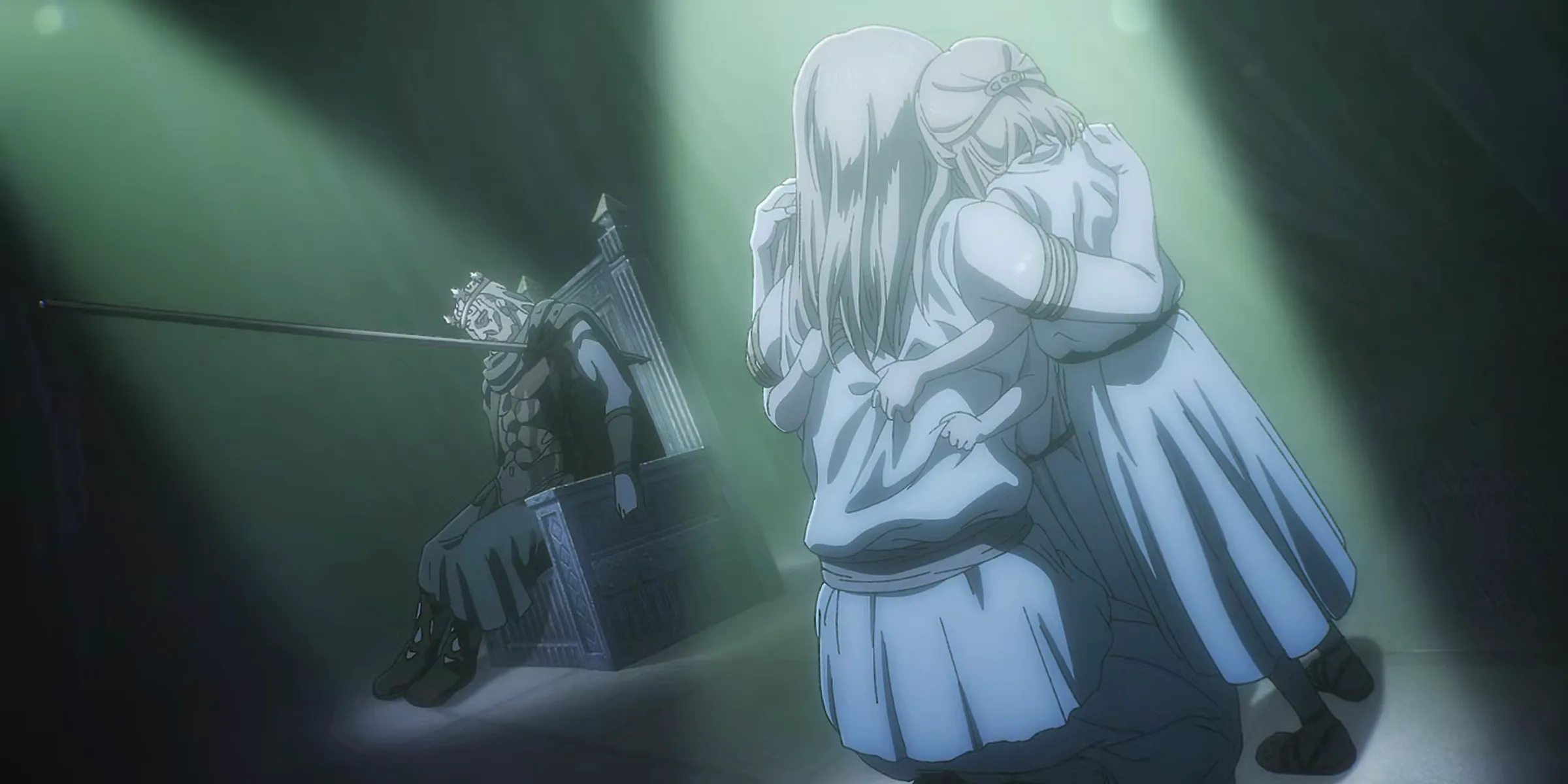
How was Ymir freed? Who freed Ymir?
The ending does not reduce Ymir's release to a broken lock or a single rescuer. Eren and Mikasa affect her at different moments, and the series leaves viewers to connect Ymir's choice in the Paths with the disappearance of titan power.
- Category
- Plot & ending
- Read time
- 13 min
- Updated
- Spoilers
- Full
- Share
The ending gives Eren and Mikasa different roles in Ymir Fritz's release, but it does not state a single causal formula. In the Paths, Eren addresses her as a person and Ymir chooses to support him rather than obey Zeke's royal-blood command. Later, Ymir watches Mikasa kill Eren; he had already told Armin that Ymir was waiting for that choice, although he could not explain why. A common reading is that Eren makes the decision possible and Mikasa demonstrates that love does not require obedience. When Ymir lets go of that bond, titan power disappears.
The short answer, and why it takes two names
The first turning point is Eren's intervention in the Paths: he addresses Ymir as a person, she rejects Zeke's order and gives Eren the Founder's power. That changes who directs the power, but it does not end the Paths or the titans.
The second comes when Mikasa kills Eren. Ymir watches the scene, and titan power disappears immediately afterwards. Eren had told Armin that Ymir was waiting for something from Mikasa, but he also admits that he does not fully understand her choice.
The answer therefore requires two names and a clear distinction between fact and interpretation. The series shows what each person does; the idea that Eren offers Ymir agency and Mikasa shows her love without obedience is a reading supported by those scenes, not an explanation stated outright.
What bound Ymir, which was not chains
Ymir Fritz does not come to the power of the titans as a chosen one. She comes to it as a slave: King Fritz razed her village, killed her parents and cut the tongues out of the people he kept, and she grew up among those people with no name worth recording. When she gets the most powerful body that has ever existed, the first thing she does with it is whatever he tells her: bridges, cleared fields, enemy armies wiped off the ground in an afternoon. Thirteen years of that. He rewards her by taking her as a concubine and she bears him three daughters.
She dies in front of him, stepping in front of a spear meant for the king. And not even that releases her: he orders her daughters to eat her corpse so the power will not leave the family, and ever since, the world has spent eighteen centuries arguing about how she got that power without ever asking her.
What comes next is the genuinely unbearable part. In the Paths she goes on building, by hand and out of sand, every titan that has ever existed, each time a descendant of her owner asks for one. Two thousand years. Alone. With nobody locking her in, threatening her or watching her — only because she was told to once and nobody ever came to say she could stop.
What Eren says to her in the Paths
The moment arrives through an abuse of power. Zeke takes his brother to the room the world is operated from, fails to talk him into the euthanasia plan and decides to stop asking: he has royal blood, they are standing in the one place where that is worth anything, and he gives Ymir the order to stop Eren. She obeys, as she always has, and chains him where he stands.
What Eren does then is not struggle against the chains: he addresses her. He asks her for nothing, promises her nothing and gives her no counter-order — which, holding the Founder, he could try. He tells her what she is, and it turns out that in two thousand years nobody had.
She lets him go. And she goes further than letting him go: she takes his side and hands him everything she has. From that instant the Paths stop answering to the blood of the family that bought her.
Ymir. Stop him. That is an order from royal blood.
You have spent two thousand years doing as you are told. Why? Who is making you stay here?
You are not a slave. And you are not a god. You are a person, and you do not have to serve anyone.
You can decide.
Why that sentence does not free her
If Eren's sentence had been enough, the story would end right there. And it does not: what Ymir does immediately after being told she does not have to serve anyone is start serving somebody again. She gives Eren the whole of the Founder, raises with him a body that is no longer a fifteen-metre titan, and sets the Rumbling walking, which is the most destructive order ever to come out of that plain of sand.
Put another way: her owner changed, her condition did not. Eren offers her a permission, and a permission is still something somebody grants you — which is exactly the structure she cannot get out of. She still needs to see something no sentence can give her.
And there is a second, more uncomfortable reason the story drops without underlining it. What binds Ymir is not fear of the king: it is the love she has for him, which she does not understand herself. Nobody can talk you out of that. You can only get out of it by watching somebody standing where you stood do the opposite of what you did.
What Mikasa does, and why it works
Of the whole cast, the only person who loves somebody with the same blind intensity Ymir loved the king with is Mikasa. She has spent half her life following Eren wherever he goes, including the places she should not follow him to, and he knows it: in the last conversation in the Paths he gives her the life they never chose before asking her to forget him.
The situation put in front of her is the one Ymir had, with the roles reversed. The person she loves is asking her to follow; following means letting almost everyone die. Ymir stepped in front of the spear and then spent two thousand years obeying. Mikasa goes into the mouth of the Founder with a blade, cuts Eren's head free of the body, carries it out into the light and kisses it.
That is what Ymir needed to see, and it is why the power goes out in that exact instant and no other. It is not that Mikasa wins the battle: it is that she proves to Ymir you can love someone to the end and still go against them, and that this is also love — only the kind paid for with the thing that hurts most. The answer she had been waiting twenty centuries for was not an order. It was an example.
Who freed her: the three readings
The story does not put the answer in anybody's mouth, and any summary that hands out clean credit is picking a side. What it does leave is three readings, all three supported by what is on screen, which disagree about something bigger than an attribution: they disagree about whether Ymir was ever bound at all.
The third is the most uncomfortable of them, and it is worth stating in full. If in two thousand years nobody locked her in, if she obeyed because she was told to once, then the door had been open for twenty centuries and what was missing was her nerve to walk through it. Under that reading neither Eren nor Mikasa frees her: they take away her excuse.
Some readers reverse the direction entirely — arguing that the one manoeuvring all along was her, in order to reach exactly that scene. It is a minority reading and the story neither confirms nor forecloses it, but it explains something the other two leave loose: why the power of the titans held out precisely that long.
Who frees Ymir Fritz?
The Eren reading
What binds her is an old order nobody had ever revoked. What releases her is somebody finally telling her she is a person and can decide. If you take this reading, Ymir is a slave who was missing the permission, and Mikasa only confirms she was right to believe it.
How she rests
The first thing that happens to Ymir when the world stops is that she is thanked. Not for the power, nor for the empire she built, nor for the titans: for the life she brought into the world. In two thousand years it had never happened, and it is the only thing the story grants her before letting her go.
And the last thing she is shown doing is going back to the throne room and doing it differently. The scene is the one from two millennia ago — the king, the spear, her in the middle — except that this time she stands aside. She lets the weapon through, turns to her three daughters and stays with them. It is not revenge: it is the first decision of her own that appears in the record.
Then she is gone, and everything that hung from her body ends with her. Every titan on earth becomes a person again in the same instant, the walls included. That the oldest problem in the world was solved on the day a slave was finally allowed to rest is the last thing the story says, and it says it without underlining it.
Frequently asked questions
Who freed Ymir Fritz?
Two people between them. Eren tells her in the Paths that she is not a slave and not a god, but a person who can decide, and she stops obeying royal blood. But she only rests when she sees Mikasa kill the person she loves to save the world — the proof that you can love without obeying.
Why did Ymir obey for two thousand years?
Because she loved King Fritz, the man who razed her village and enslaved her, and never stopped loving him. Nobody was watching her in the Paths: she went on building titans because she was told to once and nobody ever came to say she could stop.
What exactly does Eren say to Ymir?
That she is not a slave and she is not a god either: she is a person, and she does not have to serve anyone. It is the first time in twenty centuries somebody speaks to her without asking her for anything, and it happens right after Zeke uses his royal blood to order her to stop him.
Why was Ymir waiting for Mikasa?
Because she needed to see somebody who loved with the same blind intensity she did and who stood firm anyway. Mikasa is the only person in the cast in that position, and what she does at the end is exactly the opposite of what Ymir did with her king.
Did Ymir manipulate Eren to reach that moment?
It is one of the readings in circulation, not something the story states. What is shown is that she hands Eren the power of her own accord and that the power of the titans holds out precisely until Mikasa decides. The story leaves open whether that was waiting or a plan.
What happens to the titans when Ymir is freed?
They end. She was what held the power up from the Paths, so when she goes every titan on earth becomes a person again in the same instant, including the ones that held up the walls, and nobody who has been a titan is ever one again.
Is this the same Ymir as Historia's friend?
No. Ymir Fritz is the first holder, the one from two thousand years ago. Ymir, the freckled one, is a Survey Corps soldier who spent sixty years as a pure titan; the name was given to her by cultists who used her as a false goddess, and they are not related.
- TRA·003Plot & ending
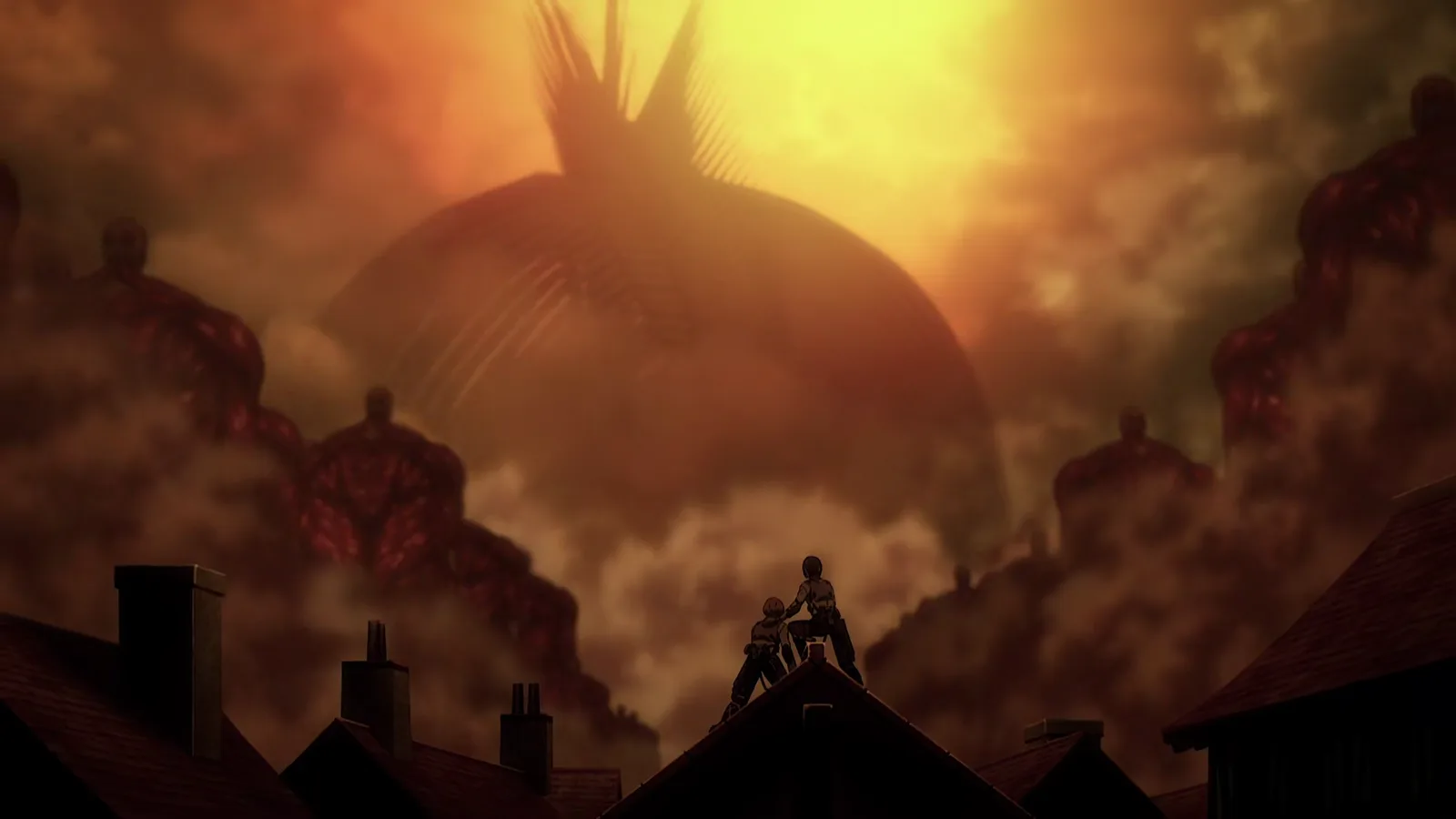 Why does Eren start the Rumbling?It is one of the central questions raised by the ending, and a one-line answer hides the disagreement built into it. The Rumbling culminates four years in which Eren encounters diplomacy, deterrence and Zeke's euthanasia plan, rejects each option on different grounds, and moves towards destroying the world beyond Paradis. This article separates what he tells other people, what he admits to Armin and the part played by his future memories.
 - TIT·002Titans
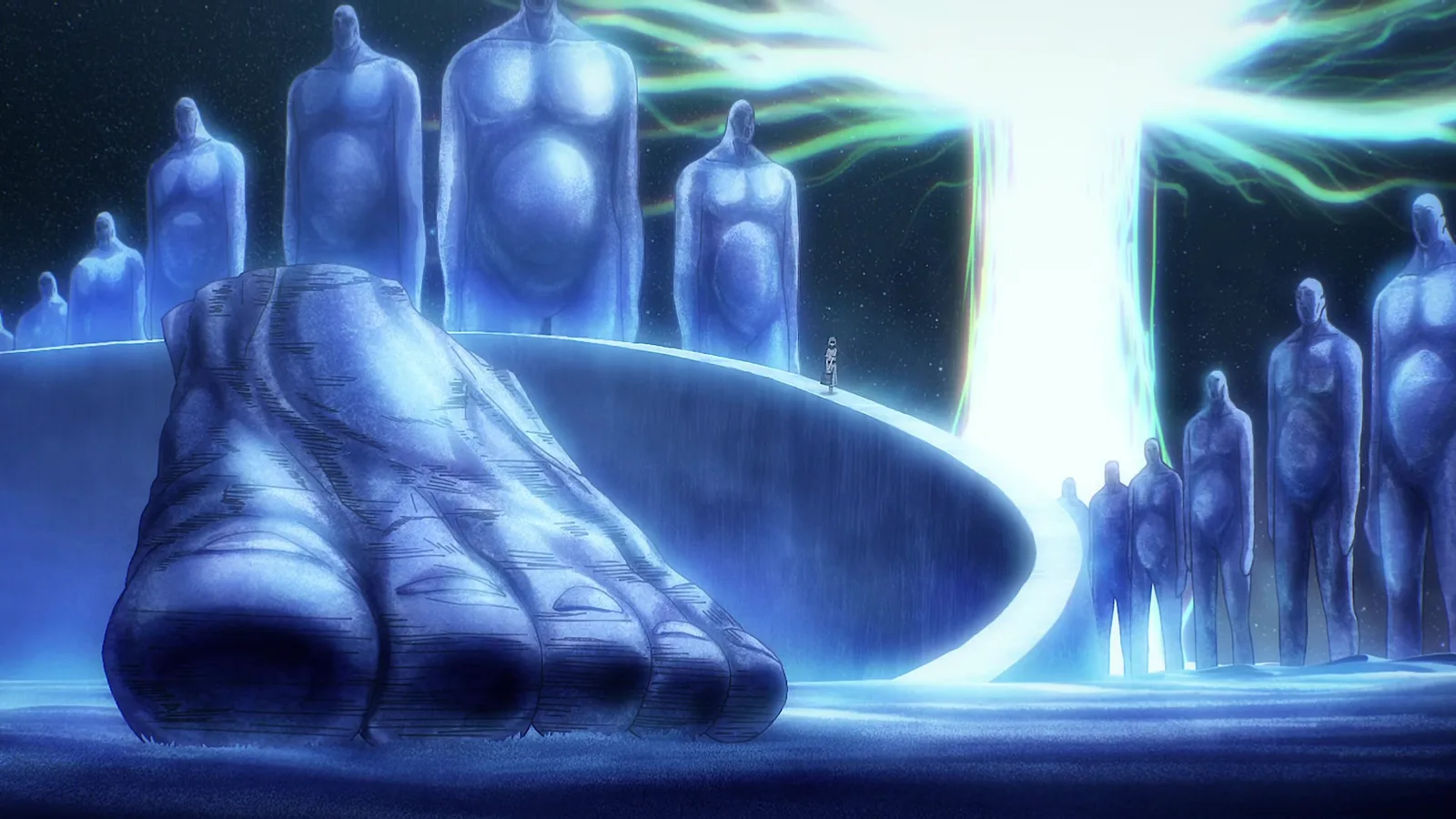 Who are the Subjects of Ymir, the Eldians of Attack on TitanThe Subjects of Ymir are Ymir Fritz's descendants and the only people who can be transformed into titans. Beyond Paradis, different states identify them as Eldians; Marley confines them in internment zones and uses the possibility of transformation to justify segregation, military recruitment and propaganda.
 - TIT·001Titans
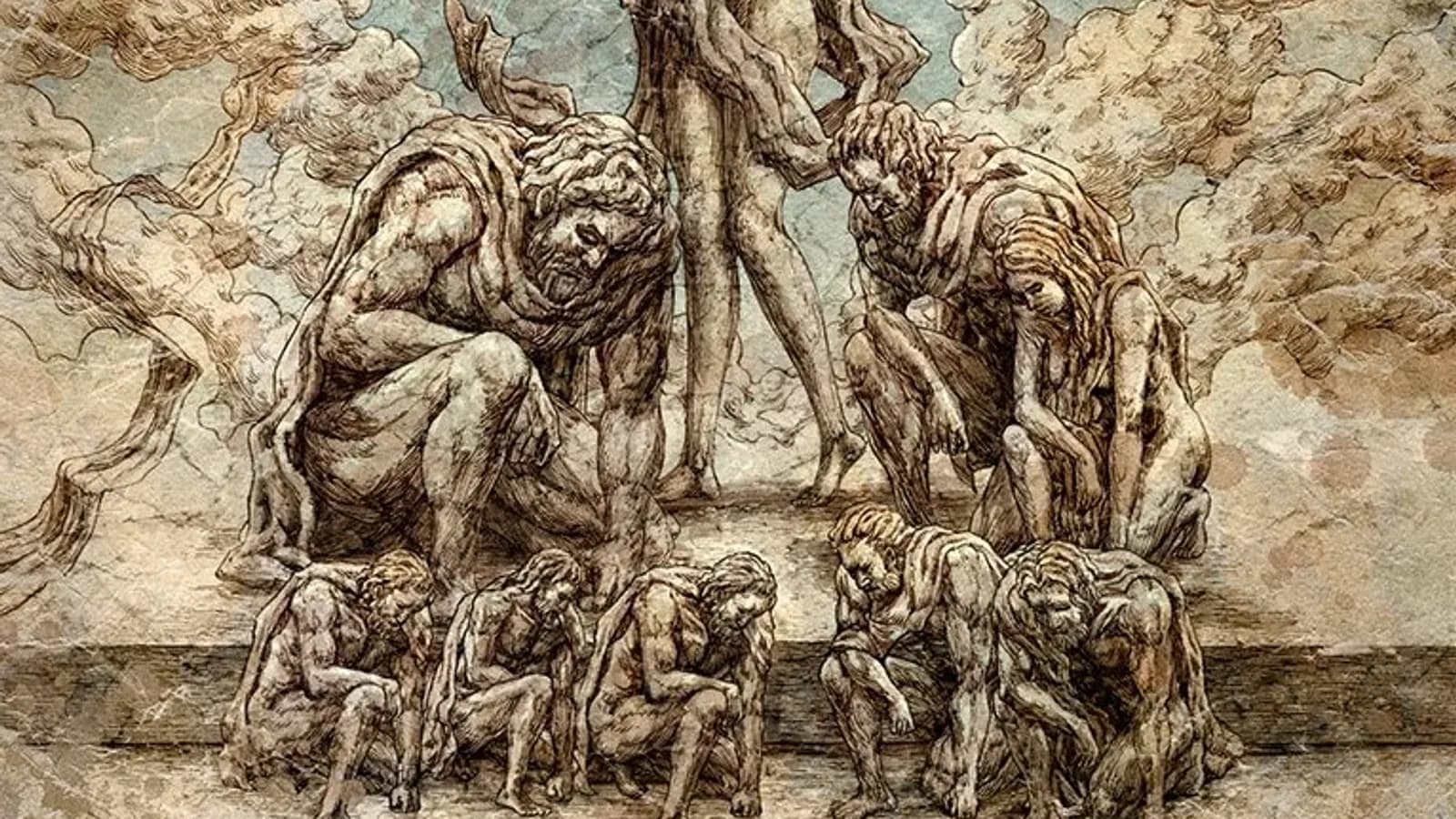 Who are the Nine Titans in Attack on Titan?The Nine Titans are nine distinct powers, each with its own form, size and ability. Unlike pure titans, whoever inherits one keeps their human mind and chooses when to transform: they are weapon, symbol and sentence all at once.