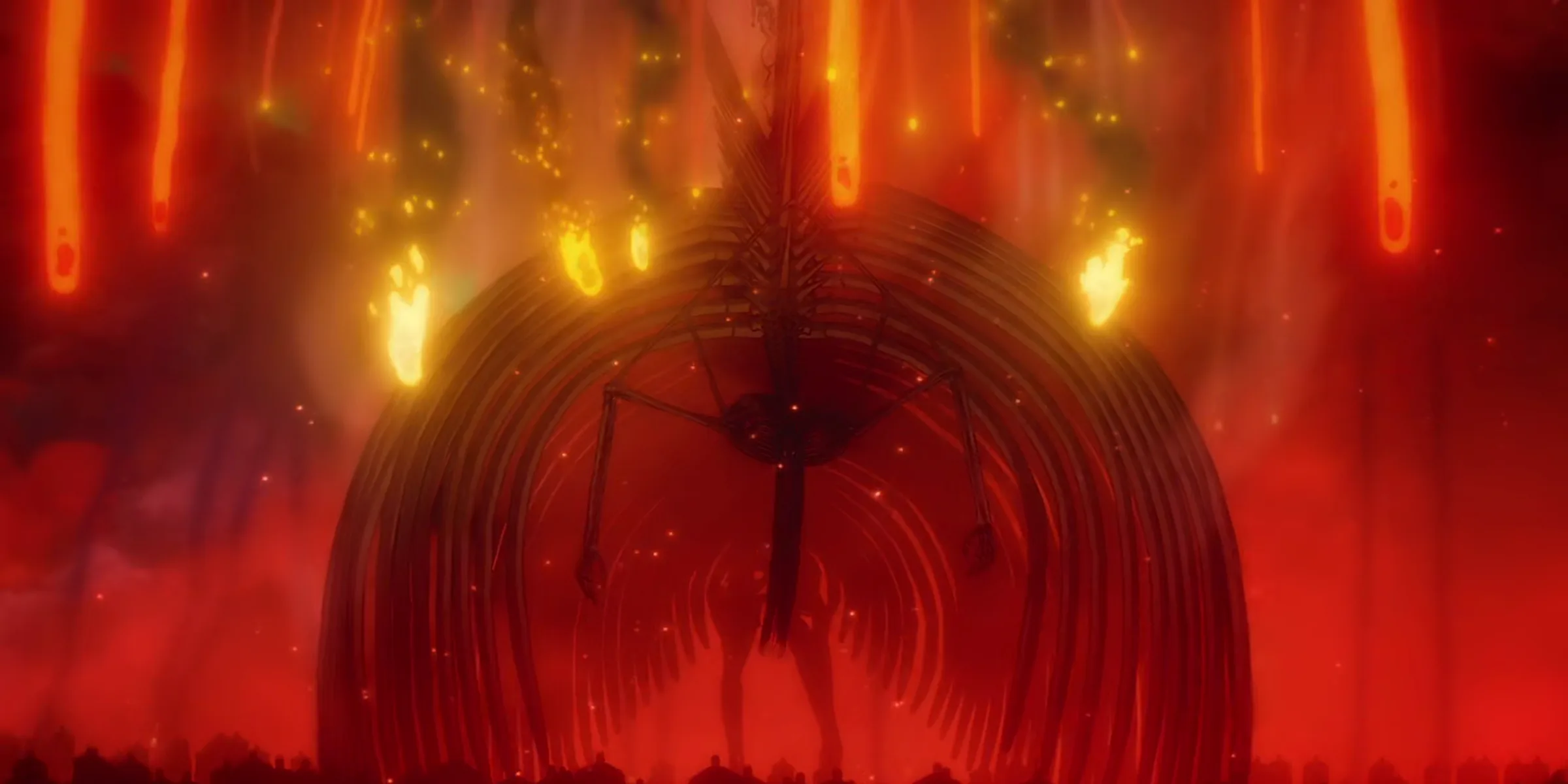
Why does Eren start the Rumbling?
It is one of the central questions raised by the ending, and a one-line answer hides the disagreement built into it. The Rumbling culminates four years in which Eren encounters diplomacy, deterrence and Zeke's euthanasia plan, rejects each option on different grounds, and moves towards destroying the world beyond Paradis. This article separates what he tells other people, what he admits to Armin and the part played by his future memories.
- Category
- Plot & ending
- Read time
- 12 min
- Updated
- Spoilers
- Full
- Share
Eren gives several reasons for starting the Rumbling. After turning against diplomacy, the 50-year plan and Zeke's euthanasia plan, he uses the Founder in the name of protecting the island and the people he loves. In his final conversation with Armin, however, he also admits that he wanted to see the devastated landscape he had imagined, while his future memories had shown him parts of that path years earlier. The story leaves those military, personal and fatalistic motives together rather than declaring one the complete answer.
The short answer, and why it is not enough
One answer Eren gives is military: after the declaration of war in Liberio, he argues that the Rumbling will protect Paradis. The story complicates that defence by showing other proposals — the 50-year plan and euthanasia — and by having Eren admit to Armin a personal desire that cannot be reduced to strategy.
The longer answer has three layers that need to be kept apart. The first is tactical: the threat facing the island in 854. The second is moral: what each alternative costs and who pays. The third is personal: what Eren wanted and what part his memories of the future played.
This article follows that order and presents three readings supported by specific scenes, without turning any one of them into the sole explanation.
What he saw four years earlier
At the memorial ceremony for the dead of Shiganshina, Eren kisses the queen's hand and contact with royal blood opens memories that are not his. What the story shows at that point is the past: his father beneath the Reiss chapel. What is only revealed much later is that in the same instant he also saw fragments of what was coming, the Rumbling and his own end included.
That detail reorders the next four years. Eren is not walking towards an unknown future: he is walking towards one he has already seen and does not want. And the Founder's power does not run in a straight line either — it is he, from the future, who pushes Grisha through the chapel door, so that the man who massacred a family of children to steal the Founder was being steered by the boy he was about to hand it to.
Out of that comes the discomfort the story never entirely resolves: if he saw the future and acted, did he choose it or fulfil it? He puts himself on the uncomfortable side of it when he says he would have done the same thing even if he had known nothing.
The ways out he rejected, one by one
Between the basement and the Rumbling there are four years in which every possible alternative is offered to Paradis, and closes. Armin argues for the only one that costs no lives: go out into the world and prove there are no devils on the island. The island tries it through Hizuru and it does not work — and it does not work because Zeke had signed, years earlier, that his sole intermediary would never negotiate on Paradis's behalf.
The other two ways out are complete plans, and each asks a price Eren will not pay. The 50-year plan buys half a century in exchange for Historia's life and a chain of children raised to inherit a titan. The euthanasia plan ends the titans without killing anyone, in exchange for deciding on behalf of millions that their people should cease to exist.
And by 854 the clock allows no more deliberation: the entire world has declared war from a stage in Liberio, the allied fleet is gathering, and Eren has four years left of his thirteen. The story puts it that starkly — but it also makes clear that Eren does not reject the alternatives only for their prices. He rejects them because none of them ends with him walking the world on the other side of the sea.
| What it offered | Why he rejects it | |
|---|---|---|
| Armin's diplomacy | Showing the world there are no devils on the island | The only channel was bought not to open, and the world signs the war before listening |
| The 50-year plan | Half a century of peace bought with the threat of the Rumbling | The queen and her children pay for it, and the world grants no such span |
| The euthanasia plan | The end of the titans without one further death | It erases his own people without asking a single one of them |
| Giving up the Founder | Stepping aside and letting another holder decide | The next holder inherits less time and the same bad hand |
Accomplice before executioner
Before crossing to Marley, Floch arranges a meeting for Eren with Yelena, and there he learns about the euthanasia plan and the wine. From that moment he cannot rebel: if he does, hundreds of officers in his own army become titans, and if he reports it, Zeke hands the island to Marley. The only move left is to pretend to cooperate — and that move also hands him a direct route to the Founder's power.
What pretending costs is the part the story does not let him off. He deserts the regiment in the middle of the continent, kills civilians in Liberio, puts his comrades into a battle that takes some of them, and treats Mikasa and Armin with the most precise cruelty he can find, so they will stop following him. He also goes to see Historia and, when she tries to talk him out of it, offers to erase the memory if she cannot live knowing it.
Not everything he does is calculation, and that is the uncomfortable part. The plan required apparent obedience; it did not require a word of what he said to his two friends in that cell.
What he actually did
In the Paths, with royal blood finally in contact with the Founder, Zeke gives his order and finds that the power does not answer to him. Eren persuades Ymir Fritz — two thousand years of obeying kings — and receives the full power from her. It is the exact moment the season's three plans resolve into one.
The first thing he does is undo the walls' hardening: the titans that spent over a century asleep inside the stone stand up. And he announces to every Subject of Ymir what he is going to do, without euphemism — flatten the world outside the island. The difference from what the previous plan envisaged is worth marking: Zeke's limited Rumbling disarmed the world; Eren's is not designed to disarm anybody.
When the march comes ashore there is no fleet, wall or city that stops it, and by the time his friends reach him around eighty per cent of humanity is dead. The world left on the other side of the sea is a flattened continent with the same technology as the island — which is, in the plan's cold arithmetic, exactly the point at which neither side can crush the other.
Why he did it: the three readings
The story does not close the question with one sentence, and any summary that does is picking a side. What it does do is leave three answers on the table that coexist inside the same character, and that he himself cannot put in order when he is finally asked to his face.
The first is military: Paradis does not survive any other way. The second is the one Eren gives Armin in the Paths, stammering: he wanted to do it, he wanted to see that landscape, and the freedom he has been chasing since childhood was not the island's but his own. And the third is inferred from the future memories: he did what he had already seen himself do, and along the way he handed his friends the role of the heroes who stop the monster and save what is left of the world.
All three are compatible, and that discomfort is the point. None of them exonerates him: around eighty per cent of humanity dies in every one of them.
Why does he start the Rumbling?
The military reading
What moves him is the survival of Paradis against a global alliance. What decides the timing is that no alternative is left un-expired. If you take this reading, Eren is a soldier doing the last piece of arithmetic available.
How it ends
He is stopped by his own friends, allied with the Marleyan warriors they had spent their lives fighting. Mikasa kills him and, with him, the power of the titans goes out: every transformed Eldian gets their body back, including the titans that had held up the walls for over a century.
What is left is a world split into two equally broken halves. Outside, a flattened continent; inside, an island that survives and that almost nobody is going to forgive. Three years later, the world's ambassadors land on Paradis — which is exactly what the 50-year plan wanted to achieve without killing anyone, and which arrives anyway, paid for in the worst possible way.
And the story keeps its last line to defuse any triumphant reading: peace lasts as long as people decide to keep it. Conflict has not been removed from the world, only switched off for a while.
Frequently asked questions
Why does Eren start the Rumbling?
Because he concludes that the island does not survive any other way once the entire world has declared war on it, and because the alternatives offered to him seem unpayable. On top of that is what he admits himself: he wanted to do it, and he had seen that future four years earlier.
When did Eren first see the future?
At the memorial ceremony for the dead of Shiganshina, when he kissed Queen Historia's hand: contact with royal blood opened his father's memories and, as is revealed much later, fragments of his own future as well.
Did Eren have a choice, or was it all written?
The story deliberately leaves the question open. The Founder's power allows a holder to receive memories of the future and act on them, so his story is a closed loop. The only thing he asserts is that he would have done the same even if he had known nothing.
What is the difference between Zeke's Rumbling and Eren's?
Zeke's was a limited Rumbling: forcibly disarming the world so the euthanasia plan could then be carried out. Eren's is not aimed at disarming anyone, but at flattening everything outside the island.
How many people die in the Rumbling?
Around eighty per cent of humanity. The march is stopped before it completes its route because his own friends, allied with Marley's warriors, manage to reach him.
Why was Eren cruel to Mikasa and Armin?
So they would stop following him and could face him without hesitating. That is the explanation the character himself gives, and the story deliberately leaves it incomplete: nothing in the plan required him to say what he said in that cell.
What happens to the titans at the end?
They are gone. When Mikasa kills Eren, the power of the titans is extinguished and every transformed Eldian gets their human body back, including the ones that held up the walls.
- TRA·002Plot & ending
 What is Zeke's euthanasia plan?The euthanasia plan is the most uncomfortable answer the story gives to the question of how the titans end: not by killing anyone, but by making sure nobody else is born. It is Zeke Yeager's real objective, the one hiding behind the deal Paradis believed it had signed, and the secret engine of almost everything that happens in the fourth season.
 - TRA·001Plot & ending
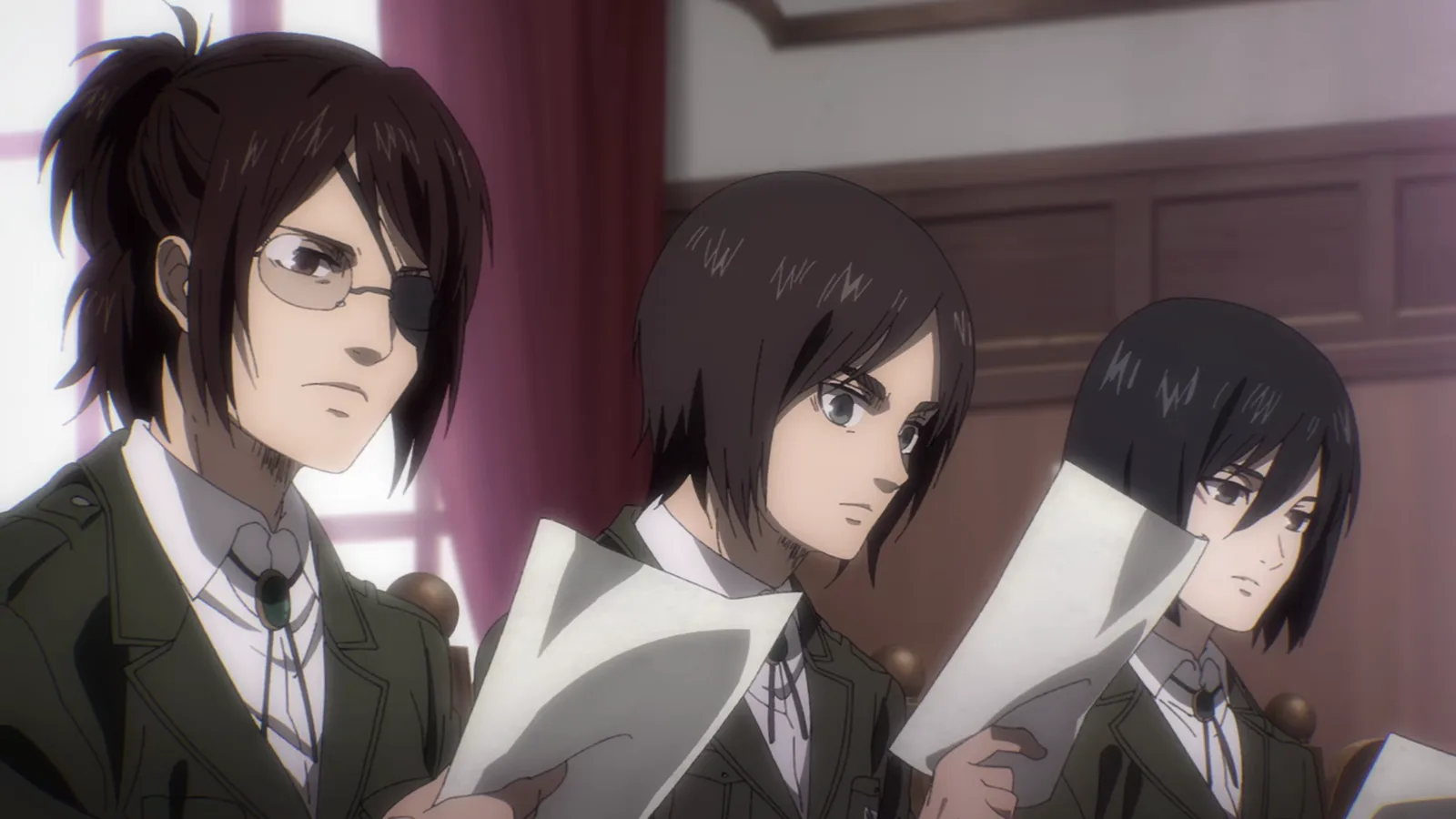 What is the 50-year plan in Attack on Titan?The 50-year plan is the long-term deterrence and modernisation proposal presented to Paradis. It combines a limited demonstration of the Rumbling with Hizuru-backed industrial development, but depends on a royal-blood succession that places the cost on Historia and her descendants. That bargain drives much of the conflict in the fourth season.
 - MUN·001The world
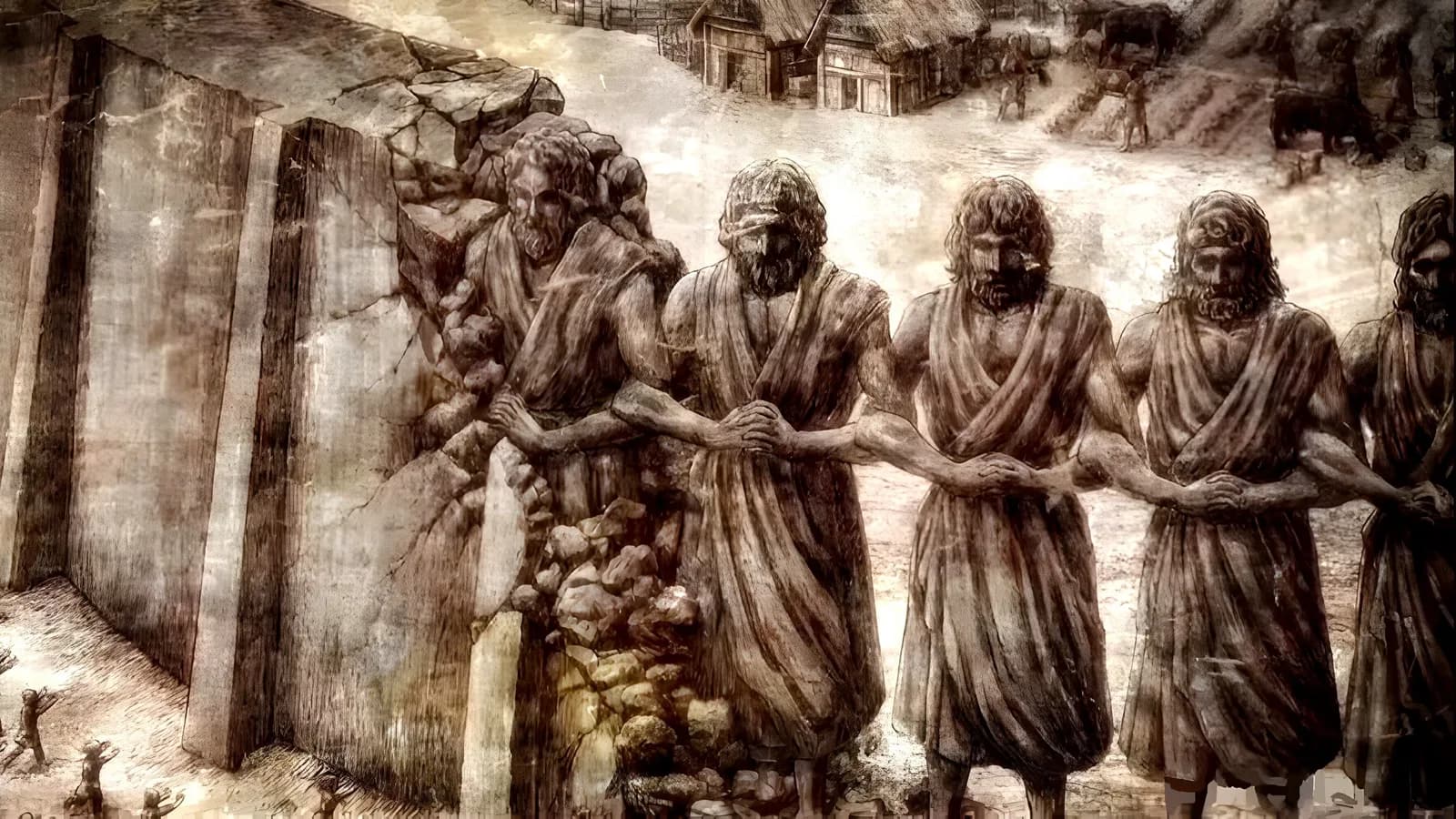 What are the walls in Attack on Titan and why do they exist?On a first reading, the walls are the colossal defence that lets humanity survive the titans: three concentric rings roughly fifty metres tall, sheltering the last known civilisation. That is the apparent truth Attack on Titan opens with, and it carries the emotional weight of the show's first half.