What are the walls in Attack on Titan and why do they exist?
On a first reading, the walls are the colossal defence that lets humanity survive the titans: three concentric rings roughly fifty metres tall, sheltering the last known civilisation. That is the apparent truth Attack on Titan opens with, and it carries the emotional weight of the show's first half.
- Category
- The world
- Read time
- 6 min
- Updated
- Spoilers
- Full
- Share
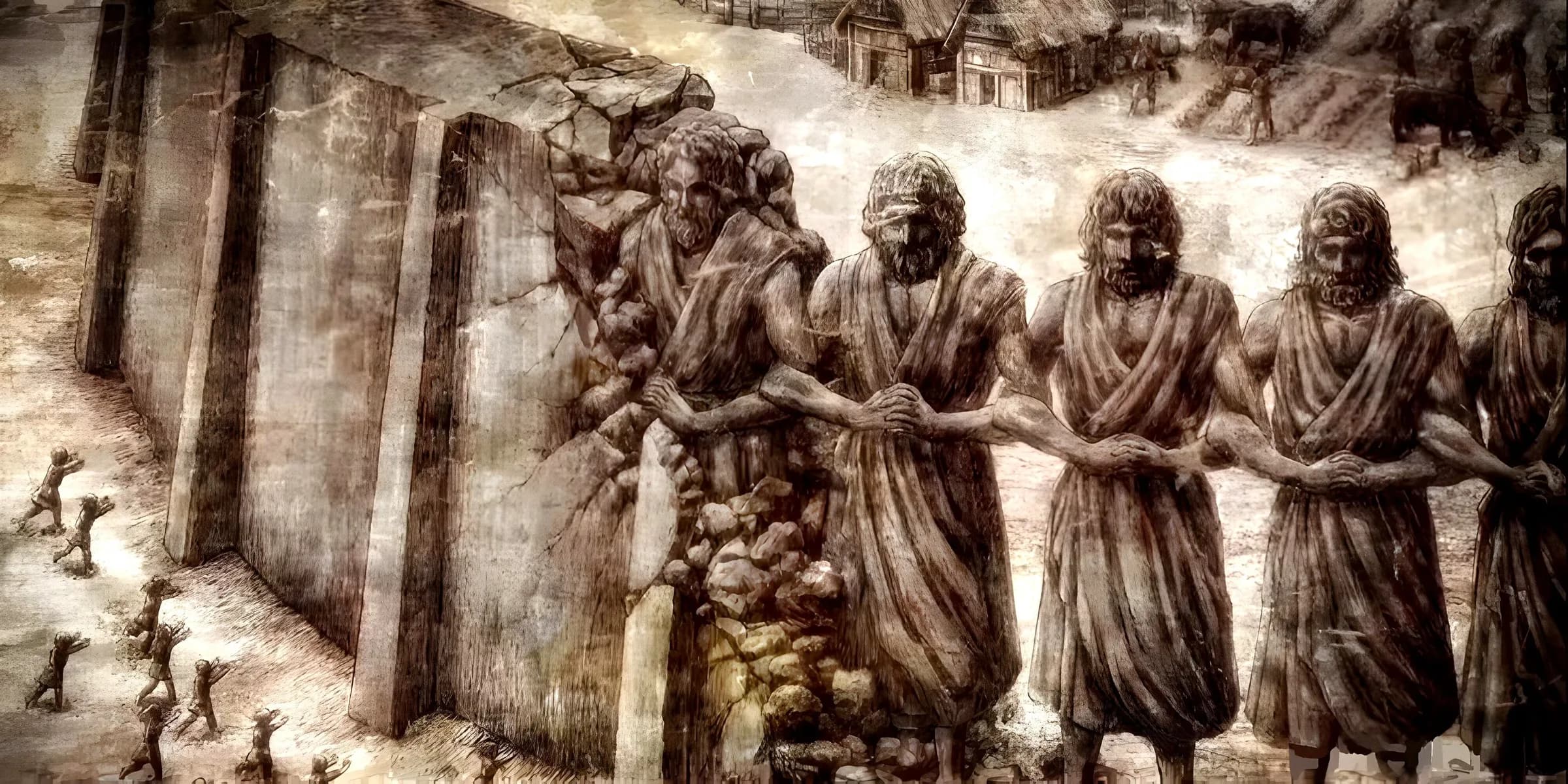
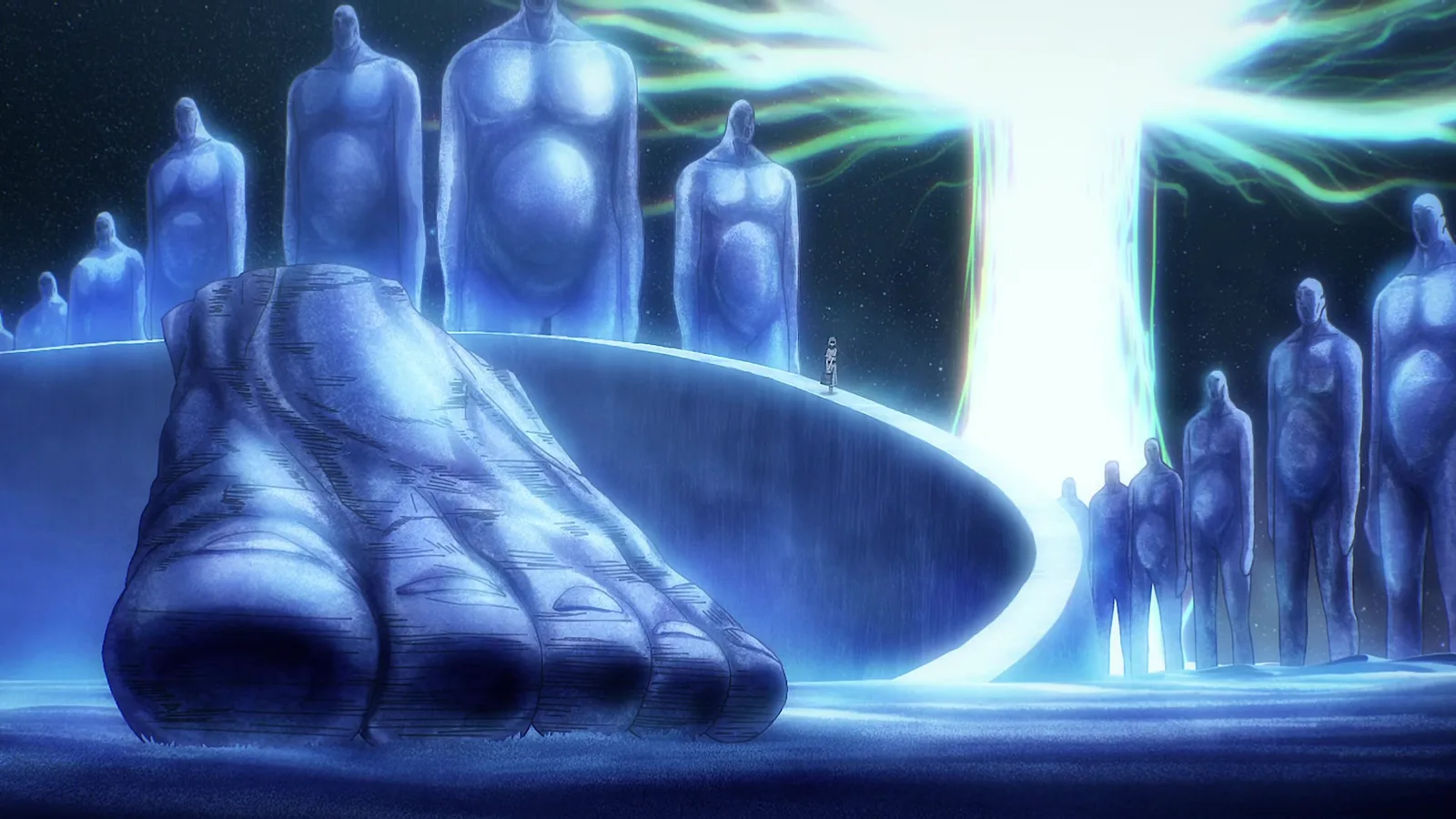
The walls of Attack on Titan are not mere fortifications: they are thousands of hardened Wall Titans, raised by King Karl Fritz as both a refuge and a deterrent weapon. When that power awakens, it becomes the Rumbling.
The first reading: refuge and mental border
The walls' first narrative function is twofold. They are a physical defence — a sealed space separating humans from titans — and they are a mental border. They create the illusion that the world ends there, that outside history is irrelevant, and that the only threat is mindless monsters.
The first episode captures that starting point: a city ringed by walls over fifty metres tall and a population convinced those structures keep it safe. The loss of Shiganshina District during the fall of Wall Maria shatters that illusion within the story's first hour.
The three walls: Maria, Rose and Sheena
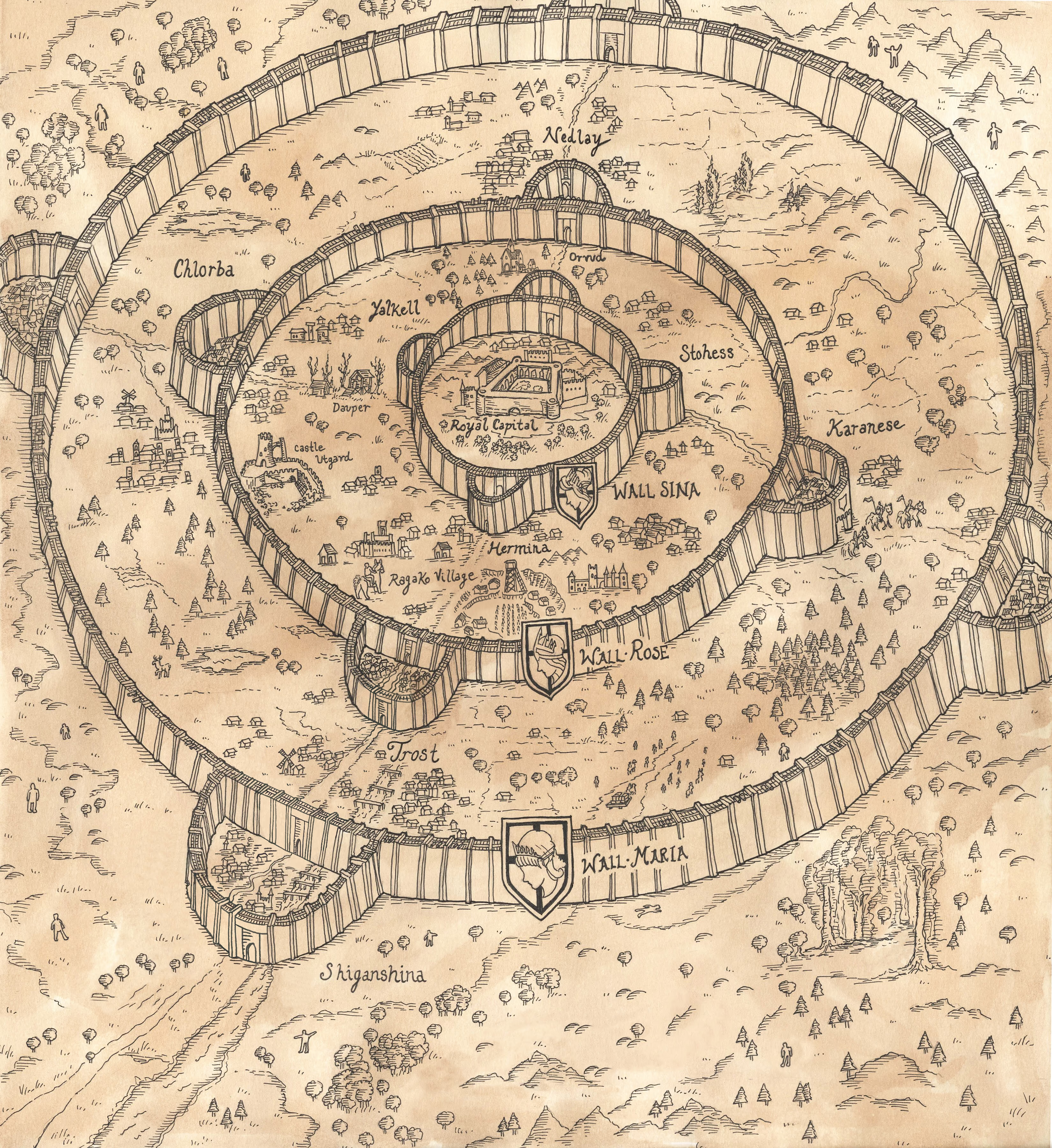
The walls form three concentric rings: Wall Maria on the outside, Wall Rose in the middle, and Wall Sheena guarding the political core, with the capital Mitras at its heart.
The order matters because it also encodes the social hierarchy: the further in, the more privilege and the more distance from the front line. The story uses that geography to talk about inequality, propaganda and internal dehumanisation. Those closest to the centre live best and know least; those most exposed pay first when the system collapses.
From Maria's frontier to the heart of Sheena
| Wall Maria | Wall Rose | Wall Sheena | |
|---|---|---|---|
| Position | Outer ring | Middle ring | Inner ring |
| What it protects | The frontier and farmland | Most of the population | The capital, crown and nobility |
| Key districts | Shiganshina | Trost | Stohess and Ehrmich |
| Story role | Falls in 845 and creates the refugee crisis | Becomes the new front line | Its stone reveals the first Wall Titan |
What the walls really hide
This is where the decisive part begins. The walls are not inert constructions: inside every stretch sleep thousands of hardened Wall Titans, standing in file, capable of marching and unleashing a world-scale apocalypse.
The 145th king, Karl Fritz, raised them when he withdrew to the island after the Great Titan War, leaving that power as a deterrent: if the world attacked Paradis, the walls would walk. That latent threat is the Rumbling — and its final activation by Eren Yeager during the Rumbling confirms that the protective wall was always a weapon as well.
Why the Wall Church exists
The Wall Church worships the walls as something sacred that must not be touched, opposing any attempt to reinforce or drill them. Read against the walls' true nature, that fanaticism stops looking like superstition: the cult knew part of the secret and served as a cog in the regime's machinery of silence.
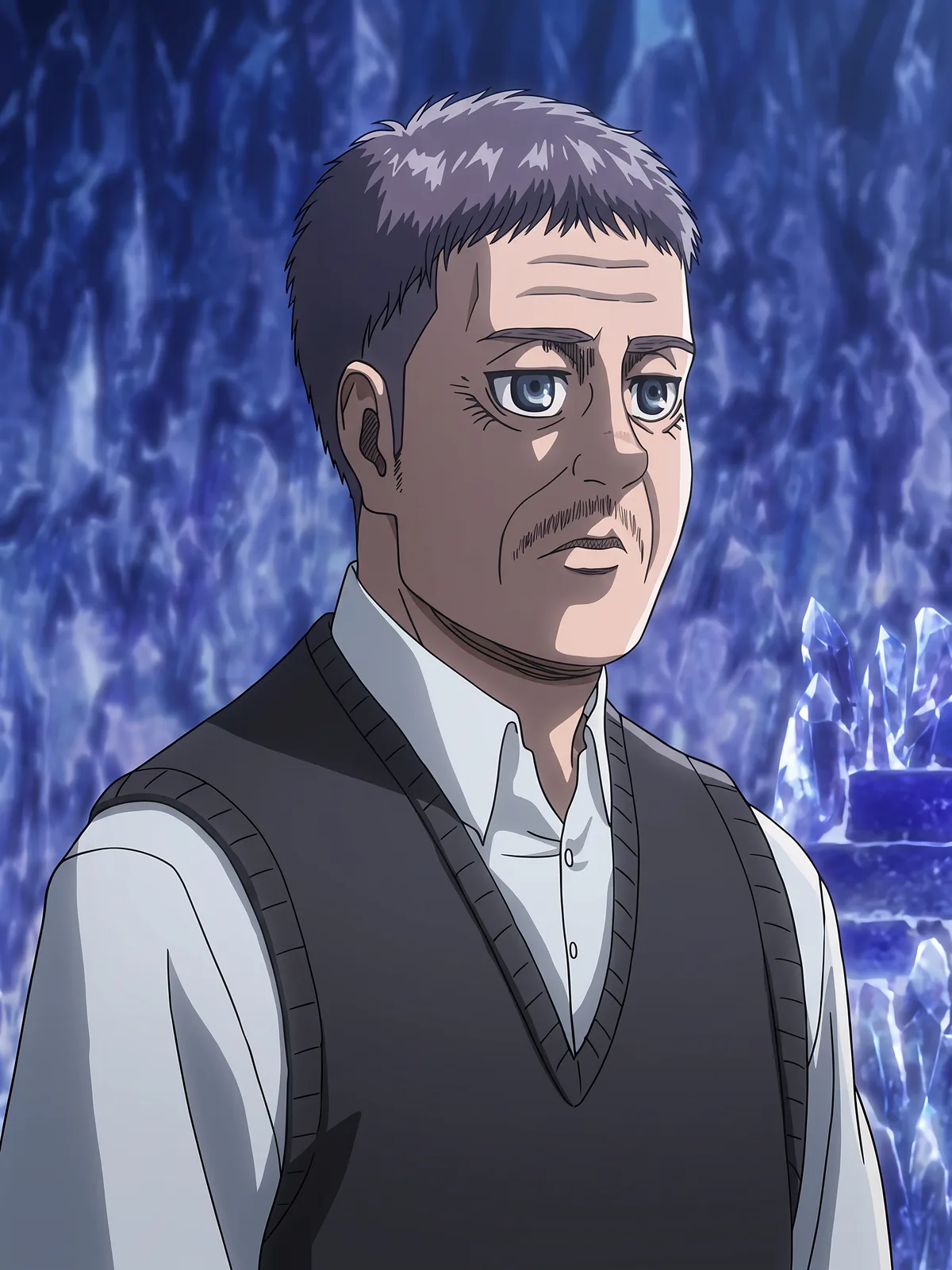
Figures like Pastor Nick show that the question is not only what lies beyond the walls, but who wrote the official version of what they mean. That thread leads straight to the hidden royal family: the Reiss line, true custodians of the Founding Titan.



How they relate to Paradis and the truth of the world
Once the story opens the door to Marley, to Eldia's history and to the legacy of Ymir Fritz, the walls stop being the centre of the world and become the physical symptom of a political and historical decision: the exile to Paradis and the king's vow of non-intervention.
The revelation of the basement truth left by Grisha Yeager inverts the reader's mental map: inside the walls lives not "humanity", but an isolated fragment of a far older conflict between Eldians and Marleyans.
Why did Karl Fritz raise the walls?
Inside the Walls
After the war, Karl Fritz raised the three Walls to save the last remnants of humanity. He protected Paradis by keeping the titans beyond the stone. The threat of the Wall Titans was unknown, because nobody remembered the construction.
Why the walls matter so much in the ending
At the series' close, the walls cease to function as defensive boundaries: Eren releases the Wall Titans and turns the structure into an instrument of mass destruction. The visual reversal is direct — what protected Paradis for a century now threatens the populations beyond the island.
Read symbolically, the Rumbling violently repurposes the same device that had sustained the apparent peace. That interpretation connects the history of the walls with the Nine Titans and the political decisions that make the ending possible.
Frequently asked questions
Were the walls just defensive structures?
No. That is the initial reading, but the story reveals they are made of hardened Wall Titans and constitute a deterrent power of colossal scale.
What are the three walls called?
Wall Maria (outer), Wall Rose (middle) and Wall Sheena (inner), with the capital Mitras at the centre.
Who built the walls, and when?
The 145th Eldian king, Karl Fritz, raised them with the power of the Founding Titan after withdrawing to Paradis, roughly a hundred years before the story begins.
Why did the Wall Church worship them?
Because it knew at least part of their secret and insisted they must not be tampered with: touching them meant, quite literally, waking what sleeps inside.
How are the walls connected to the Rumbling?
They are its vessel: when the Rumbling is triggered, the Wall Titans begin their march and all three walls crumble, releasing King Fritz's deterrent in full.
- TIT·001Titans
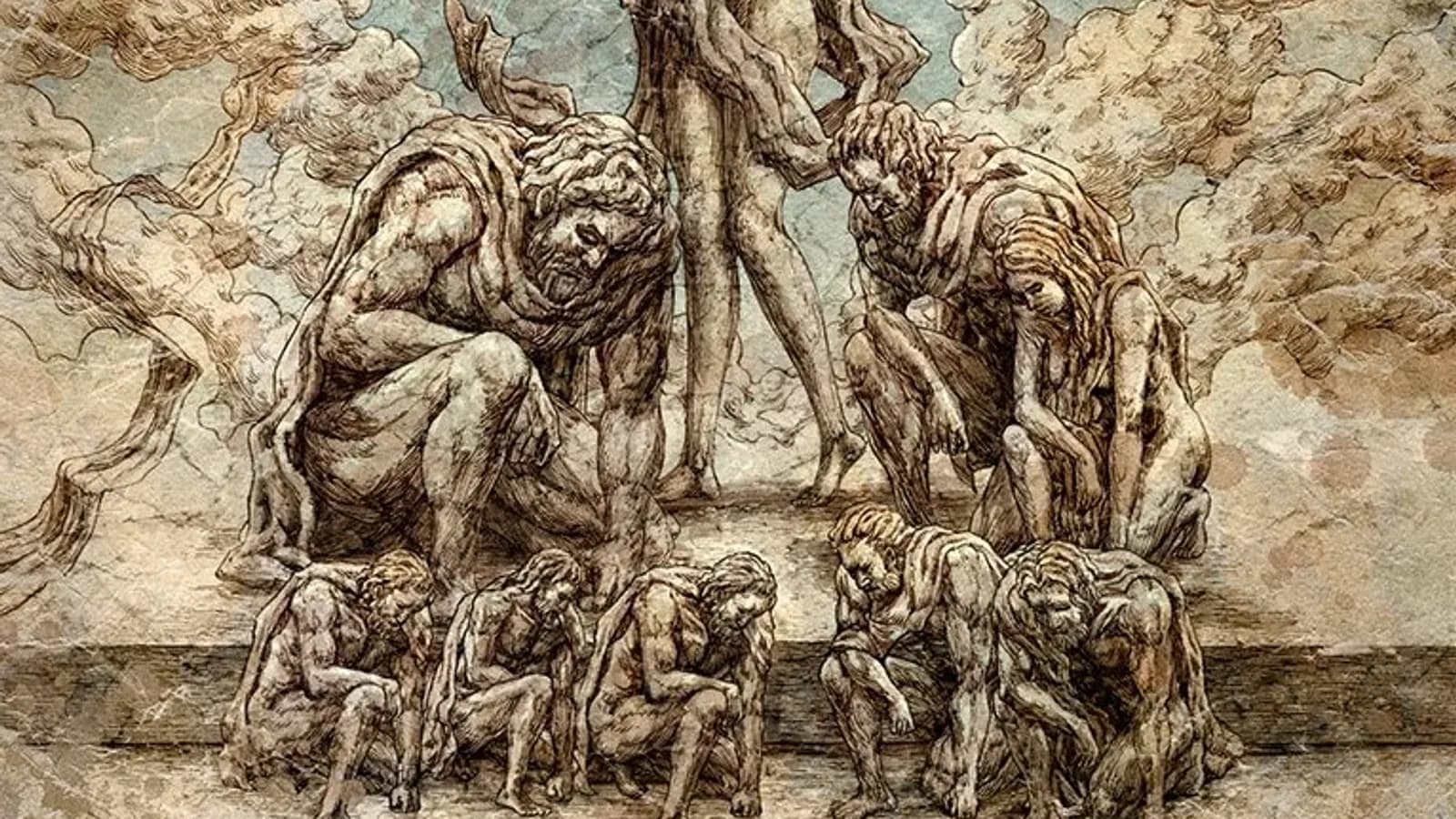 Who are the Nine Titans in Attack on Titan?The Nine Titans are nine distinct powers, each with its own form, size and ability. Unlike pure titans, whoever inherits one keeps their human mind and chooses when to transform: they are weapon, symbol and sentence all at once.
 - TIT·002Titans
 Who are the Subjects of Ymir, the Eldians of Attack on TitanThe Subjects of Ymir are Ymir Fritz's descendants and the only people who can be transformed into titans. Beyond Paradis, different states identify them as Eldians; Marley confines them in internment zones and uses the possibility of transformation to justify segregation, military recruitment and propaganda.
 - MUN·002The world
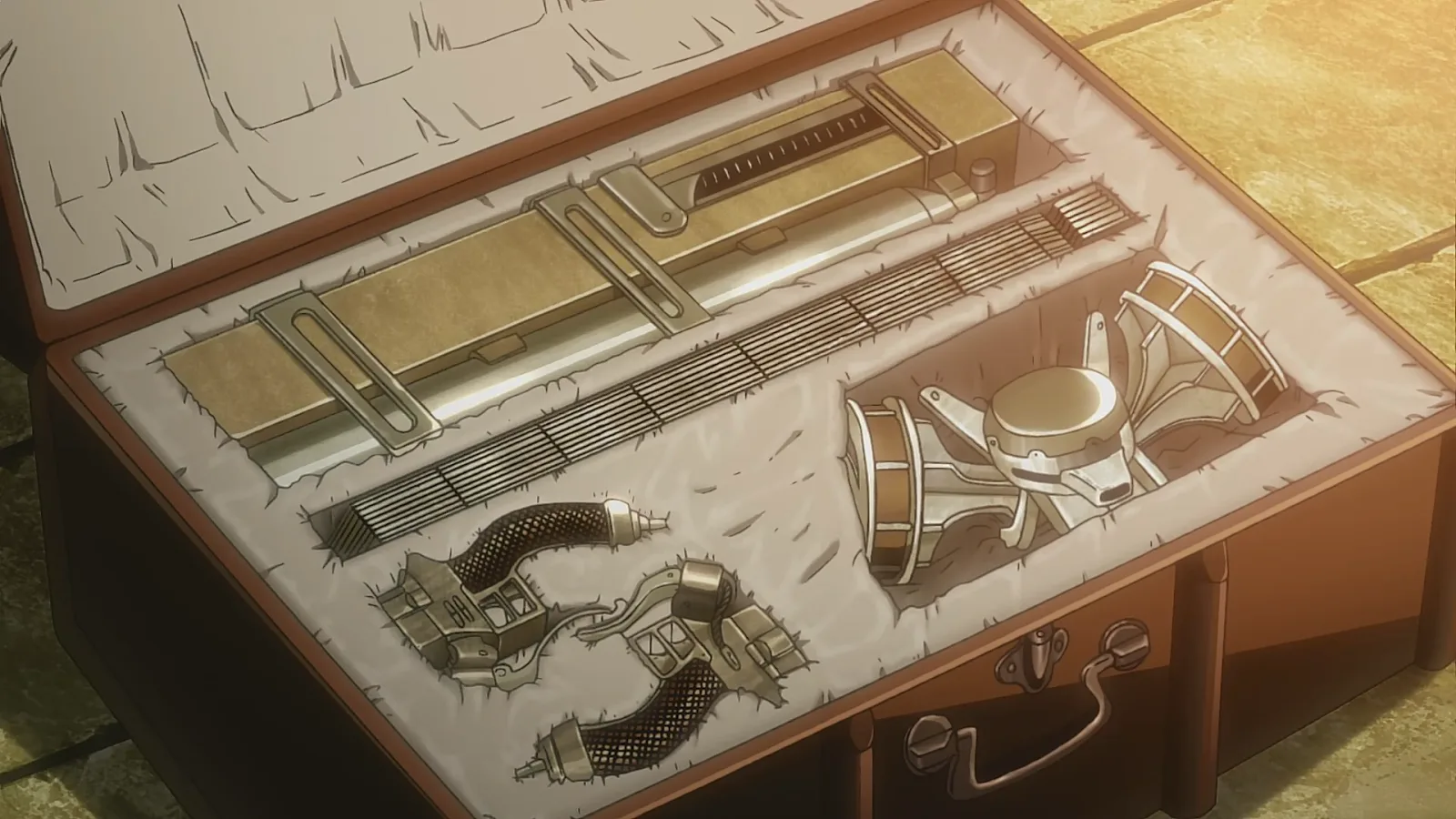 What is the omni-directional mobility gear in Attack on Titan?Omni-directional mobility gear is the technology that lets Attack on Titan's soldiers fight in the air. It fires two anchors, reels in their cables and releases pressurised gas, turning buildings, walls and trees into pivot points.
 - INS·001Institutions
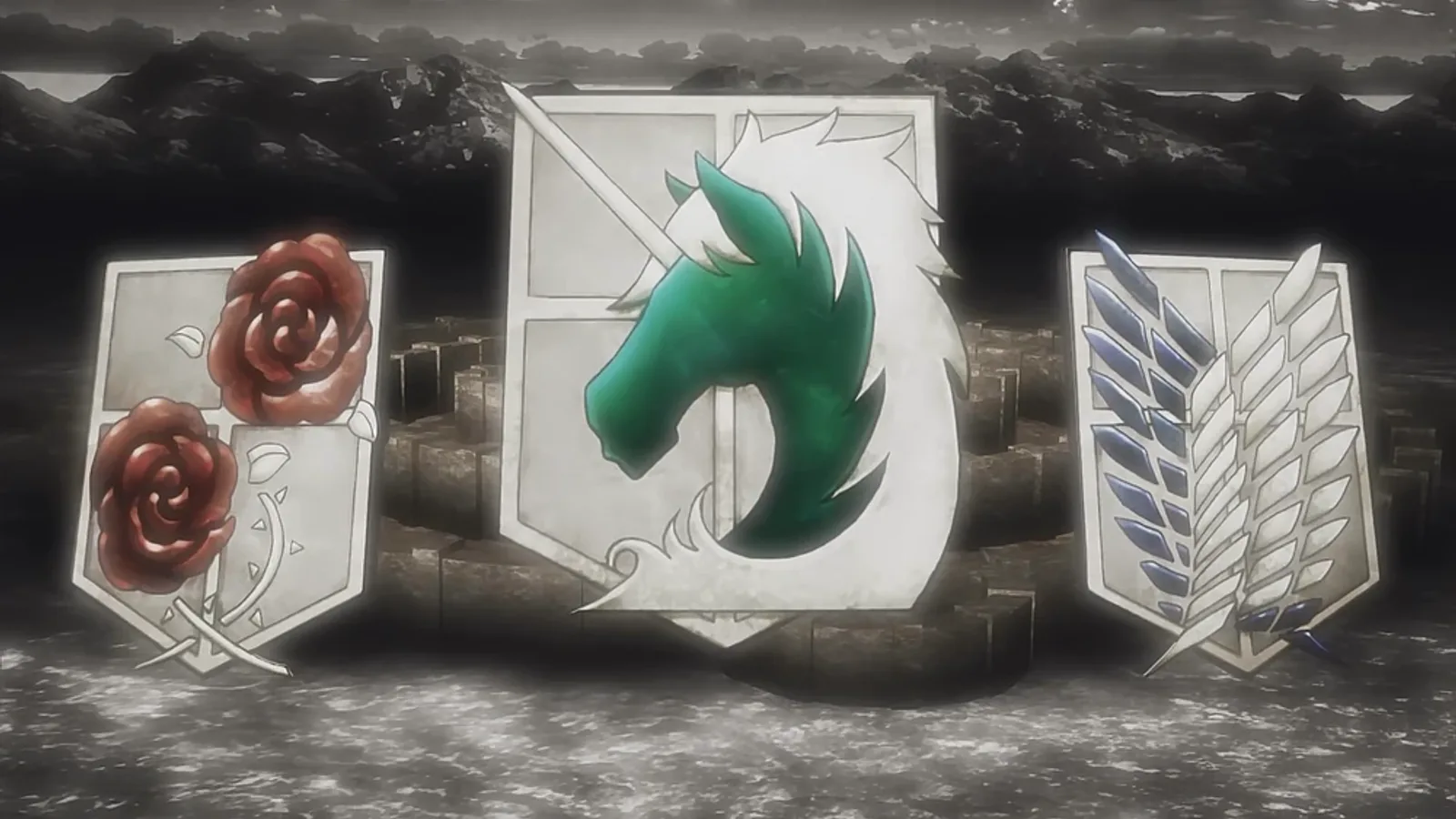 What are the military branches in Attack on Titan?Inside the walls, a recruit does not choose a job: they choose a branch. There are only three, and what separates them is not rank or weaponry but how far from the outer wall a soldier spends their life. The choice is made at fifteen, in front of the whole class, and it defines almost everything that follows.